When an accident leaves you injured, figuring out who pays for your medical bills and lost wages can feel just as overwhelming as the recovery itself, especially when more than one person or company played a role in causing the harm. Fault is rarely black and white, and insurance companies often use that gray area to shift blame and reduce payouts. Understanding how shared fault actually works can help you protect your claim and avoid leaving money on the table.
This guide breaks down the legal concepts, state rules, and real-world scenarios that determine how compensation gets divided when multiple parties share the blame.
Understanding Comparative and Contributory Negligence Rules
Every state uses one of a few legal frameworks to decide how fault reduces or eliminates a victim’s compensation. These rules matter enormously because the same accident could result in very different payouts depending on where it happened. Some states allow injured people to recover damages even if they were mostly at fault, while others bar recovery entirely if the victim holds any responsibility at all. Knowing which system applies to your case is often the first step in understanding what your claim might actually be worth.
- Pure comparative negligence: you can recover damages even if you were 99 percent at fault, just reduced by your share
- Modified comparative negligence: you can recover only if your fault stays below 50 or 51 percent, depending on the state
- Pure contributory negligence: any fault on your part, even 1 percent, can block recovery entirely
- Each state applies these rules differently, so the location of the accident matters as much as the facts
How Insurance Companies Calculate Percentage of Blame
Insurance adjusters do not simply guess at fault percentages; they rely on police reports, witness statements, photos, and physical evidence to build a picture of what happened. Adjusters are trained to look for any detail that shifts even a small percentage of blame onto the injured person, because that directly reduces the payout. This is one reason claims involving multiple drivers, property owners, or businesses can drag on for months while each insurer tries to minimize its client’s share.
The process often becomes a negotiation between multiple insurance companies, each trying to protect their own policyholder’s interests rather than yours. Without someone advocating specifically for the injured party, the final fault percentages assigned can end up skewed unfairly. This is where having your own documentation, timeline, and evidence becomes critical to countering a lowball fault assessment.
- Traffic camera footage and dashcam recordings often carry significant weight
- Expert reconstruction reports can clarify disputed sequences of events
- Prior complaints or maintenance records may show a property owner knew about a hazard
- Statements made at the scene, even casual ones, can be used to assign blame later
Multi-Vehicle Accidents and Chain-Reaction Collisions

Highway pileups and rear-end chain reactions are some of the most complicated cases for dividing fault, since three, four, or more vehicles might be involved in a matter of seconds. Investigators often have to determine which impact caused which injury, since a driver hit twice in quick succession may have entirely different damages tied to each collision. In these situations, fault can be split among several drivers based on following distance, speed, road conditions, and reaction time.
It is common for one driver to bear the majority of fault, such as someone who was texting and failed to brake, while other drivers share a smaller percentage due to factors like tailgating. Because so many parties and insurance policies are involved, these cases often take longer to resolve and require careful piecing together of each vehicle’s role. Anyone caught in this kind of collision benefits from keeping their own notes and photos rather than relying solely on the official report.
- Get the contact and insurance information for every driver involved, not just the one you collided with
- Note weather and road conditions immediately, since these details fade from memory quickly
- Ask any witnesses to briefly describe what they saw before they leave the scene
- Request a copy of the full police report once it becomes available, not just the summary
Premises Liability Cases With Several Responsible Parties
Injuries that happen on someone else’s property, such as slip-and-falls or structural collapses, often involve more than one responsible party. A property owner might share blame with a maintenance company, a tenant, or a contractor who performed recent work. Determining who had a duty to fix the hazard and who actually knew about it can require digging into leases, service contracts, and inspection records.
These cases frequently hinge on the timeline of who was warned about a danger and how quickly they acted, or failed to act. A shopping center owner, for instance, might blame a cleaning crew for not addressing a spill, while the cleaning company argues the owner never reported it. Sorting through these overlapping responsibilities is exactly the kind of work personal injury lawyers handle regularly, since it requires reviewing contracts and communication records that most injured people never see.
- Maintenance logs can reveal whether a hazard was reported and ignored
- Security footage often shows how long a dangerous condition existed before the injury
- Lease agreements can clarify who was legally responsible for repairs
- Contractor agreements may shift liability away from the property owner entirely
Dog Bites and Shared Owner Responsibility
Dog bite cases can involve more complexity than people expect, particularly when the dog was not on its owner’s property at the time of the attack. A dog walker, a pet-sitting service, or even a landlord who knew about a dangerous animal on the premises could all share some responsibility. State laws vary widely on this topic, with some holding owners strictly liable regardless of the dog’s history and others requiring proof the owner knew the animal was dangerous.
When a bite happens while someone else is watching the dog, figuring out who pays medical bills often becomes a dispute between the owner’s homeowner insurance and the caretaker’s liability coverage. A dog bite lawyer typically starts by identifying every party who had control over the animal at the time of the incident, since that determines which insurance policies come into play. Victims are often surprised to learn that multiple claims can be filed simultaneously against different responsible parties.
- Confirm who had physical control of the dog at the moment of the attack
- Check whether the dog had any prior bite history or aggression complaints on record
- Find out whether local law imposes strict liability or requires proof of prior knowledge
- Identify all applicable insurance policies, including renters and homeowners coverage
Workplace Injuries Involving Third-Party Contractors
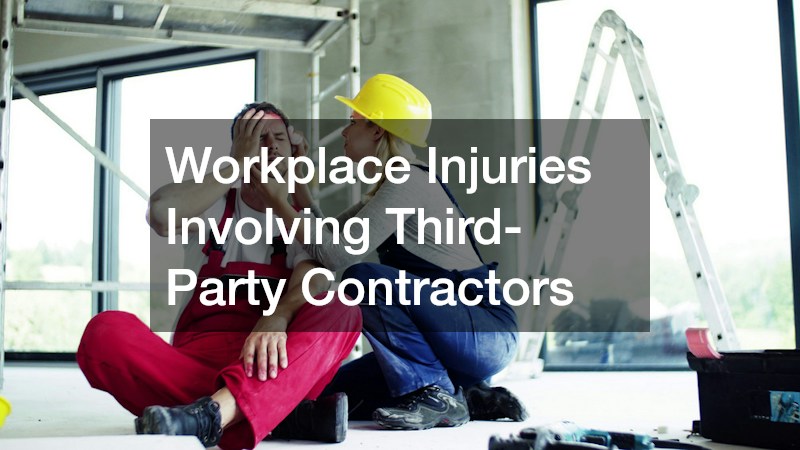
Workplace accidents often seem straightforward at first, limited to a workers’ compensation claim through the employer. But when a third party, such as an equipment manufacturer, subcontractor, or delivery driver, contributes to the injury, additional claims outside the workers’ comp system may be possible. This matters because workers’ compensation typically caps what an injured employee can recover, while a separate third-party claim can cover pain and suffering that comp benefits do not include.
Construction sites are a common setting for these layered claims, since multiple contractors, subcontractors, and equipment suppliers might all be working in the same space when an accident occurs. Determining whose negligence actually caused the injury, whether it was faulty equipment, a subcontractor’s careless work, or a general contractor’s poor site safety, requires careful investigation. Because these cases often involve overlapping insurance policies and corporate liability structures, many injured workers consult a personal injury attorney to understand whether a third-party claim is worth pursuing alongside their workers’ comp benefits.
- Workers’ compensation generally does not require proving fault, but it limits total compensation
- A third-party claim can add compensation for pain, suffering, and reduced quality of life
- Equipment manufacturers can be held liable if defective machinery caused the injury
- General contractors may share liability if unsafe conditions were allowed to persist
Product Liability Claims Across the Supply Chain
When a defective product causes an injury, fault can be spread across manufacturers, distributors, and retailers, each of whom played a different role in getting that product into a consumer’s hands. A manufacturing defect might point back to the factory, while a design defect could implicate the company that created the product’s blueprint in the first place. Retailers are sometimes included in these claims too, particularly if they continued selling a product after receiving safety complaints or a recall notice.
These cases often require expert testimony to explain exactly how and why a product failed, since the average consumer has no way of knowing whether a defect came from design, manufacturing, or a missing warning label. Because responsibility can be split several ways, settlements sometimes involve multiple companies contributing to a single payout. Reviewing recall history and product testing records is often the deciding factor in determining which company bears the largest share of fault.
- Design defects affect an entire product line, not just one unit
- Manufacturing defects usually point to an error in a specific batch or factory
- Failure-to-warn claims focus on missing or inadequate safety labeling
- Retailers can share liability if they ignored known recall notices
Steps to Protect Your Claim When Fault Is Disputed
Regardless of how an accident happened, there are practical steps that strengthen a claim when multiple parties are pointing fingers at each other. Documentation gathered early, before memories fade and evidence disappears, tends to carry the most weight later in negotiations or litigation. Many people turn to personal injury attorneys at this stage, since they know how to anticipate the arguments each responsible party is likely to raise. Understanding which parties are likely to share fault and how each one may respond to a claim can make a significant difference in the outcome.
- Take photos and videos of the scene from multiple angles as soon as possible
- Keep a written timeline of events while details are still fresh
- Avoid giving recorded statements to insurance companies before understanding your rights
- Save all medical records and bills related to the injury from day one
- Request copies of any incident reports filed by businesses, employers, or property owners
Conclusion
Shared fault cases are rarely simple, and the parties involved often have strong incentives to shift blame elsewhere. Understanding how comparative negligence rules work, and how insurers calculate percentages of blame, puts you in a stronger position to protect your claim. If your case involves more than one responsible party, gathering thorough documentation early and seeking professional guidance can make a significant difference in the outcome. Taking these steps now gives you the best chance at fair compensation for what you have been through.