
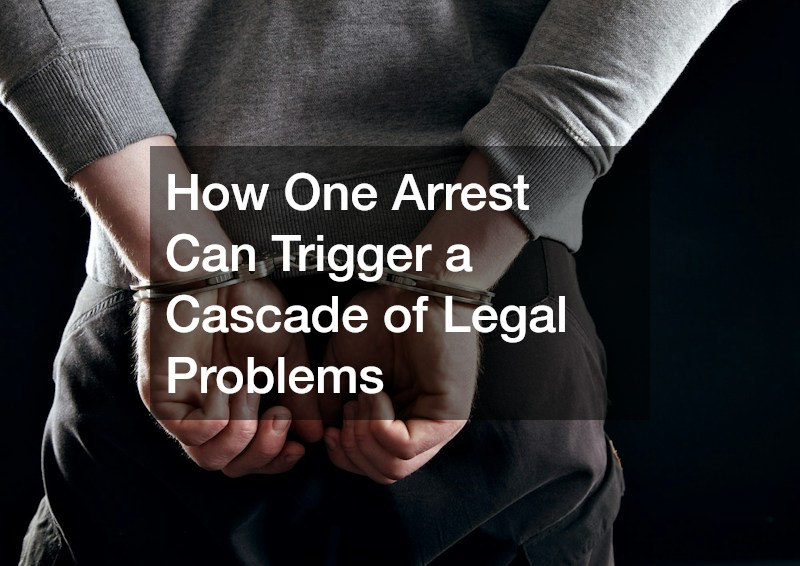
A single arrest rarely stays contained to one courtroom or one charge. What starts as a night in jail can quickly spread into your job, your finances, your family life, and your future eligibility for benefits or licenses. Understanding how these dominoes fall is the first step toward protecting yourself, and knowing which type of legal help addresses which problem can save you from making a difficult situation worse. This article walks through the most common ripple effects of an arrest and where to turn for each one.
The Immediate Criminal Charge and Its First Deadline

The moment you are booked, a clock starts running on arraignment dates, bail conditions, and evidence deadlines that most people never anticipate. In many jurisdictions, arraignment must happen within 48 to 72 hours of arrest, and that first hearing often determines bail amount, travel restrictions, and no-contact orders that remain in place for months. Missing this window, or failing to appear once it’s set, can result in an automatic bench warrant even if the original charge was minor. Missing a court date or misunderstanding a bail condition can add new charges on top of the original arrest, compounding an already stressful situation. A defendant released on the condition of no contact with a co-defendant or alleged victim, for example, may not realize that a single text message or social media comment counts as a violation. Bail can be revoked entirely for these missteps, sometimes triggering a separate charge like failure to appear or contempt, both of which carry their own penalties independent of the original case. Many defendants make the mistake of talking to police or prosecutors before understanding what they are legally required to say, which often hurts their case later. Statements made during a routine-seeming phone call, a “let’s just clear this up” conversation, or even small talk during transport can be used as admissions later, since almost nothing said to law enforcement after arrest is truly off the record. Requesting an attorney before answering any substantive questions, even ones that seem harmless, is one of the simplest ways to avoid handing prosecutors evidence they didn’t already have. Getting ahead of this first deadline with proper representation shapes everything that follows, from how bail is negotiated to whether evidence collected in the first 72 hours can later be challenged. Attorneys engaged early can also flag procedural errors, such as an improper stop or a delayed Miranda warning, before they become buried under the weight of a growing case file.
- Arraignment typically happens within 24 to 72 hours of arrest, where the defendant hears the formal charges and enters an initial plea
- Bail conditions can include travel restrictions, curfews, electronic monitoring, or no-contact orders with alleged victims or witnesses
- Bail amounts vary widely by charge severity, and failure to post bail means remaining in custody until trial or a plea deal
- Statements made without counsel present are often used against the defendant, even offhand remarks made during booking
- The right to remain silent must be actively invoked; simply staying quiet without stating it clearly may not suffice
- Missing a court date can result in a bench warrant, triggering immediate arrest and potential additional charges
- A bench warrant can also lead to forfeited bail and a longer, more restrictive detention period on subsequent arrest
Drunk Driving Charges and the Loss of Driving Privileges

A drunk or impaired driving arrest actually sets two separate legal processes in motion: a criminal case moving through the court system, and an administrative action against your driver’s license handled by the motor vehicle agency. These two proceedings run on different timelines and follow different rules of evidence, which means the outcome of one does not automatically determine the outcome of the other. It’s entirely possible to have criminal charges reduced or dismissed while still losing your license through the administrative process. Many people are surprised to learn that failing to request a hearing with the motor vehicle agency within a short window, sometimes as little as ten days from the date of arrest, can result in an automatic suspension regardless of what eventually happens in criminal court. Missing that deadline typically forfeits the right to challenge the suspension altogether, even if the underlying traffic stop was questionable or the breath test equipment was poorly maintained. This is why dwi attorneys often emphasize speed above all else when a client first calls, since early action can preserve driving privileges needed for work or family responsibilities. Requesting the hearing promptly also gives an attorney the chance to question the arresting officer under oath, review calibration records for testing devices, and identify procedural mistakes that might not surface until much later in the criminal case. In many jurisdictions, a hardship or restricted license can be negotiated during this window, allowing continued driving to work, school, or medical appointments while the case unfolds. The consequences extend well beyond the license itself. Insurance premiums often spike dramatically after a DUI-related suspension, sometimes doubling or tripling for several years, and some insurers drop coverage entirely. Jobs that require driving, from delivery routes to sales positions, can be jeopardized within days rather than months, and transportation difficulties can even complicate child custody arrangements when a parent can no longer reliably pick up or drop off children.
- License suspension hearings often have strict short deadlines — sometimes just 10 days from arrest — and missing one can mean automatic suspension
- Insurance premiums can double or triple after a conviction, with some drivers facing “high-risk” status for three to five years
- Commercial drivers may lose their livelihood entirely, since a DUI can trigger CDL disqualification even if the offense occurred in a personal vehicle
- Repeat charges carry escalating mandatory penalties, often converting a second offense into a felony with mandatory jail time
- Restricted or hardship licenses may be available, but usually require ignition interlock devices and proof of enrollment in treatment programs
- Out-of-state license holders face added complications, as violations can trigger reciprocal suspensions in their home state
Impaired Driving Arrests and Long Term Record Consequences
Beyond the immediate license issue, an impaired driving charge can leave a permanent mark on a background check that affects housing applications, professional licensing, and international travel. A qualified dui attorney can sometimes negotiate reduced charges or diversion programs that keep a conviction off a person’s permanent record, particularly for first time offenders. These programs often require community service, treatment classes, or ignition interlock devices, but the tradeoff can be worth it compared to a lifelong conviction. Anyone facing this type of charge should ask early about eligibility for alternative sentencing before accepting a plea.
Job Loss and the Path to Disability or Benefit Claims
An arrest, especially one that leads to jail time or a suspended professional license, can cost someone their job almost overnight. When that job loss coincides with a preexisting medical condition or disability, many people find themselves applying for benefits for the first time while also fighting a criminal case. Navigating that paperwork alongside a criminal matter is overwhelming, which is why social security attorneys frequently work with clients who are dealing with multiple legal fronts at once. Filing deadlines for benefit applications do not pause for a criminal case, so parallel legal support becomes essential rather than optional.
- Initial disability applications are frequently denied and require appeal
- Appeals have firm deadlines, often 60 days from denial
- Loss of employer health insurance can complicate ongoing medical claims
- Benefit income may be affected by any restitution or fines owed
Marriage Strain and Custody Disputes Following an Arrest

Family relationships often absorb the shock of an arrest before anyone else does, and the strain can accelerate existing tension into a full separation. Spouses may worry about finances, reputation, or the safety of children, and these concerns sometimes lead to divorce filings that run concurrently with the criminal case. Divorce lawyers who understand how a pending criminal matter affects custody evaluations can help a client avoid statements or agreements that later damage their standing in family court. Coordination between defense counsel and family law counsel matters here, since anything said in one case can surface as evidence in the other.
- Custody evaluators may consider pending charges when assessing parental fitness
- Protective orders can restrict contact with children even before conviction
- Financial disclosures in divorce can reveal assets relevant to bail or fines
- Settlement timing sometimes shifts to avoid overlapping with a criminal trial
Physical Injuries Sustained During Arrest or in Custody
Not every arrest is clean, and injuries can occur during an altercation, a car accident involved in the arrest, or even a fall while in custody. When these injuries result from excessive force or negligence, personal injury lawyers can help pursue compensation separate from the criminal case itself. This is a distinct legal track from the criminal defense, focused on medical bills, lost wages, and pain and suffering rather than guilt or innocence. Documenting injuries with photographs and medical records immediately after the incident strengthens any later claim significantly.
Workplace Injuries That Complicate an Existing Arrest
Sometimes the arrest itself stems from or overlaps with a workplace incident, such as an altercation on a job site or an accident that led to both an injury claim and criminal allegations. In these tangled situations, workers compensation lawyers help separate the employment injury claim from the criminal matter so that one does not unfairly influence the other. Employers may attempt to deny a claim by pointing to the arrest as evidence of misconduct, even when the injury itself was unrelated to any wrongdoing. A careful legal strategy keeps these two issues from bleeding into each other and jeopardizing benefits the worker is entitled to receive.
- Employers sometimes use pending charges to contest a claim
- Workers compensation benefits are generally separate from fault in a criminal case
- Missing filing windows can forfeit medical coverage and wage replacement
- Legal coordination prevents statements in one case from harming the other
Vehicle Accidents That Lead to Arrest and Civil Claims
A car accident that results in an arrest, such as one involving suspected impairment or reckless driving, often triggers both a criminal prosecution and a civil claim from anyone injured. The best accident attorneys understand how to build a civil case around police reports, witness statements, and physical evidence gathered for the criminal matter without compromising their client’s rights. Insurance companies frequently attempt early settlement offers before the full extent of injuries or liability is known, which can shortchange an injured party. Waiting for medical evaluations to conclude before signing any settlement is one of the most important protections an accident victim has.
- Police reports from the arrest often become key evidence in the civil claim
- Insurance adjusters may contact victims before injuries are fully diagnosed
- Statute of limitations for civil claims varies by state, often two to three years
- Settlements signed too early can waive rights to future medical costs
Financial Collapse and the Decision to File for Bankruptcy

Legal fees, bail costs, lost wages, and medical bills from an arrest can pile up faster than most people expect, sometimes pushing a household toward insolvency within months. When debts become unmanageable, a chapter 7 bankruptcy lawyer can evaluate whether liquidating nonexempt assets to discharge debt makes sense given the person’s income and obligations. This process is separate from the criminal case but can be affected by court ordered restitution, which is generally not dischargeable in bankruptcy. Understanding this distinction before filing prevents the disappointment of expecting relief that the law does not provide for certain criminal financial obligations.
Minors Facing Charges and the Need for Specialized Representation
When the person arrested is a minor, the entire legal landscape shifts toward a system designed around rehabilitation rather than punishment, though the stakes remain serious. Finding the best juvenile court attorney available matters enormously here, since juvenile records, sealing procedures, and diversion programs vary widely by jurisdiction and require specific familiarity. A poorly handled juvenile case can follow a young person into college applications, military enlistment, and future employment despite the system’s rehabilitative intent. Parents should also consider consulting estate planning attorneys if the arrest raises questions about guardianship, trusts, or a minor’s future inheritance being affected by ongoing legal complications.
An arrest is rarely an isolated event, and treating it as one can leave you blindsided by consequences in family court, the workplace, or your financial future. The smartest move is to map out every area of your life the arrest might touch and seek focused legal guidance for each one rather than hoping a single attorney can address every angle. Start by securing strong criminal defense immediately, then work outward to the other legal fronts as they become clear. Acting early, asking specific questions, and documenting everything along the way will put you in the strongest possible position to move forward.